

How are UK independent agencies performing in 2026?
Growth is back, new business is leading the way, and employee costs are still the biggest squeeze on margin. That's the headline from this year's Agency Performance Pulse, run by the Alliance of Independent Agencies in partnership with Synergist and Moore Kingston Smith.
The findings are based on responses from 87 independent agencies, covering performance over the six months to July 2026.
UK agency market: what's really happening in 2026?
Revenue is up. New business is up more. Existing client growth still lags behind.
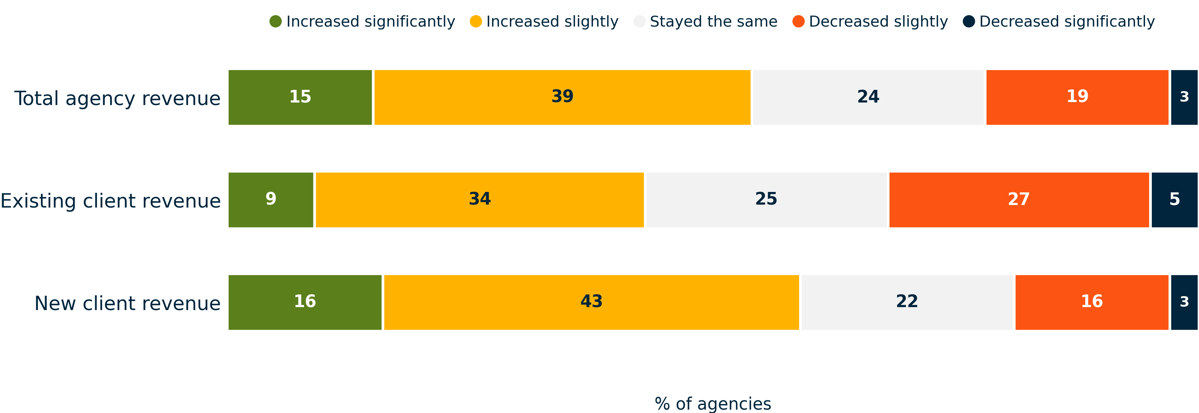
- 54% of agencies grew total revenue, against 22% who saw a decline.
- 59% grew new client revenue, against 19% who saw a decline. New business is the strongest growth engine in the sector right now.
- 43% grew existing client revenue, while 32% saw a decline and 25% stayed flat. Retained growth is the softest part of the picture.
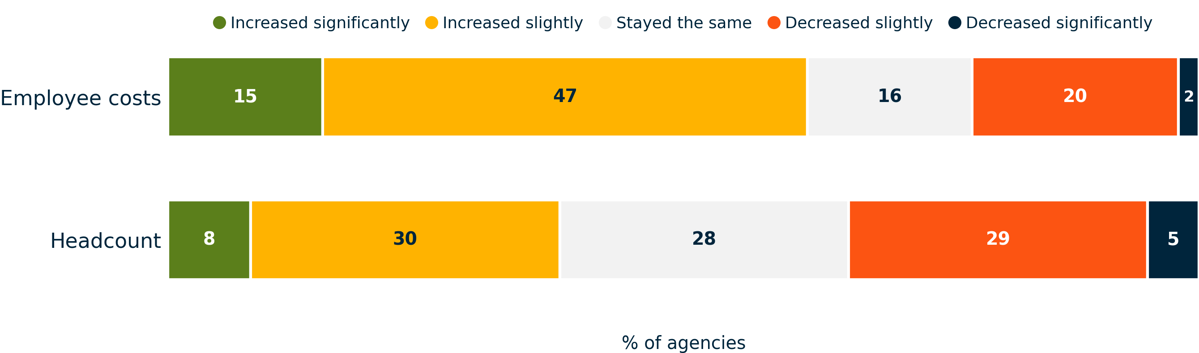
Profitability is improving too, though not for everyone. 48% of agencies reported higher EBITDA margin, while 35% saw it fall. Employee costs remain the clearest pressure point, with 62% reporting an increase against headcount growth of just 38%. Agencies are paying more for the people they already have, not just hiring more of them.
One exception stands out: smaller agencies. 64% of agencies under £1m in revenue grew EBITDA, against 48% across the sector. Discipline scales down more easily than it scales up.
What has changed since 2025?
The market hasn't transformed. Agencies have just got better at working within it.
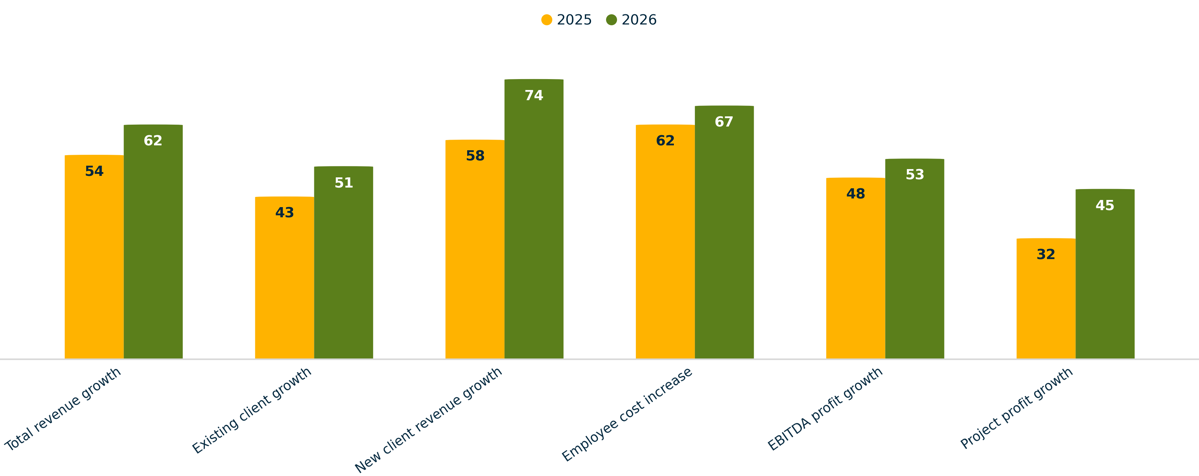
Every headline metric has moved in the right direction compared with last year's Pulse:
- Total revenue growth: 54% → 62% of agencies reporting an increase
- Existing client growth: 43% → 51%
- New client revenue growth: 58% → 74%
- EBITDA profit growth: 48% → 53%
- Project profit growth: 32% → 45%
Employee cost increases have also risen, from 62% to 67% of agencies, so the pressure on margin hasn't gone away. But more agencies are growing, and more are protecting profit while they do it.
That's the real story of 2026. Not an easier market, but agencies adapting to a hard one more effectively: tighter commercial discipline, sharper client relationships, and better use of the data they already have.
What's making growth harder for agencies?
Pipeline volatility. That's the answer in a third of responses.
Sales cycles are longer. Pitches are more heavily scrutinised. Sign-off is delayed. The opportunities are there, but converting them into revenue you can forecast is the hard part.
"Our biggest performance challenge has been forecast volatility, with project timing and scope shifts making revenue, GP and resourcing harder to manage. Demand is still there, but the challenge is getting clearer visibility on when work will land, which teams it will affect, and how reliably it converts into profitable delivery."
Three other pressures follow close behind:
- Operational efficiency and scalability (27% of responses)
- Client budget pressure and cost scrutiny (25%)
- Talent, headcount and people costs (25%)
AI sits inside all of this. It's changing what clients expect on speed, pricing and value, at the same time as it helps agencies work faster internally. Both things are true at once, and agencies are having to manage that tension.
Why forecasting has become a growth strategy
Jay Neale, CEO of Synergist, puts it simply: the strongest agencies aren't the ones with the biggest pipeline. They're the ones with the clearest view of it.
"If you have ten designers, forty hours each, minus internal time, leaves around 300 billable hours a week. Are you actually selling 1,300 hours of design time a month? Are you selling more or less? That causes the chaos down the line."
Poor forecasting leads to hiring too early, hiring too late, or overloading your best people. With staff costs still the number one pressure on margin, those calls matter more than ever. Forecasting isn't about predicting revenue for its own sake. It's about spotting the gaps early enough to sell more, or protect capacity before it costs you.
What is the UK agency outlook for H2 2026?
Cautiously positive, with the same challenges still in view.
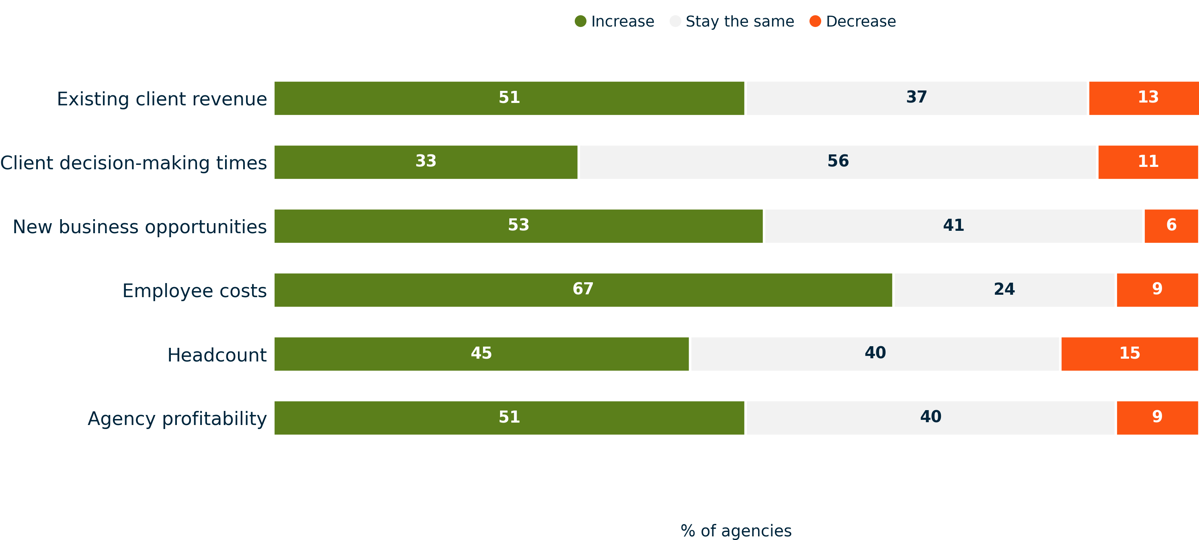
- 51% of agencies expect existing client revenue to increase over the next six months, and only 13% expect it to fall.
- 53% expect new business opportunities to increase, against just 6% expecting a decline.
- 67% expect employee costs to keep rising, but only 45% expect headcount to grow. Cost inflation without a matching hiring spree.
- 51% expect EBITDA to improve, with 40% expecting it to hold steady.
Client decision-making isn't expected to speed up. 56% of agencies expect it to stay just as slow as it is now. Growth is available. Converting it quickly is still the challenge.
What high-performing agencies do differently
Terry Martin, Managing Director at the Alliance of Independent Agencies, sees the same pattern every year:
"When I look at the agencies performing most strongly in this survey, what stands out isn't that they're facing fewer challenges. They're dealing with the same cautious clients, tighter margins and economic uncertainty as everyone else. The difference is how they're responding."
The agencies pulling ahead share three things:
- A clear sense of where they add value, backed by focused positioning rather than trying to be everything to everyone.
- Commercially disciplined operations, with tight cost control, real-time margin visibility and consistent forecasting.
- Deeper client relationships, built on proactive account management and senior engagement, not just delivery.
They're also using AI where it genuinely helps, in planning, reporting and administration, so their teams spend more time on the work only they can do.
The takeaway for agency leaders
Growth has returned to the sector. It hasn't made the job easier.
Sales cycles are longer, employee costs keep climbing, and clients are asking harder questions before they sign. The agencies protecting margin and winning new business aren't avoiding these pressures. They're managing them with better visibility: knowing what's coming, not just what's already happened.
That means connecting your pipeline, your resourcing and your financials into one place, so you can see the gaps before they become a problem.
The Agency Performance Pulse is produced by the Alliance of Independent Agencies in partnership with Synergist and Moore Kingston Smith, based on responses from 87 independent agencies.